Improper Integrals
Improper IntegralsCalculus IPrerequisite KnowledgeLimitsDefinition: LimitInfinite LimitsLimits at InfinityDefinition: Limit at InfinityDefinition: Limit at Negative InfinityEvaluating LimitsDefinition: Direct SubstitutionIndeterminate Forms of LimitsDefinition: Indeterminate QuotientsDefinition: Indeterminate DifferencesDefinition: Indeterminate ProductsDefinition: Indeterminate Powersl'Hôpital's RuleDefinition: l'Hôpital's RulePracticeCheck Your WorkUse Technology to Verify LimitsCC BY-NC-SA 4.0
Author: John J Weber III, PhD Corresponding Textbook Sections:
- Section 7.8 – Improper Integrals
Calculus I
Prerequisite Knowledge
This section contains mathematical content from previous courses that are necessary for improper integrals.
Limits
Definition: Limit
The limit of
NOTE: Here is how to interpret the symbols in the definition of a limit.
- NOTE:
Infinite Limits
- If
- If
NOTE:
Limits at Infinity
Definition: Limit at Infinity
Let
Definition: Limit at Negative Infinity
Let
NOTE: Since
Evaluating Limits
Definition: Direct Substitution
- If
- If
- If
Indeterminate Forms of Limits
Definition: Indeterminate Quotients
- Type
- Type
Definition: Indeterminate Differences
- Type
Definition: Indeterminate Products
- Type
Definition: Indeterminate Powers
- Type
- Type
- Type
l'Hôpital's Rule
NOTE: l'Hôpital's Rule is valid only for indeterminate quotients.
Definition: l'Hôpital's Rule
Suppose
then
Practice
Evaluate the following limits:
Check Your Work
Use Technology to Verify Limits
NOTE: The use of technology in this activity is to verify, i.e., check, your answers. You must show work on assessments to receive credit for all Calculus I work.
Mathematica
1(* Example from Practice 01-1: Limit at infinity of xe^(-x) *)2Limit[x*E^(-x), x->Infinity]3
4(* Example from Practice 01-5: Limit at -infinity of (1+x^6)/(1+x^3) *)5Limit[(1+x^6)/(1+x^3), x->-Infinity]6
7(* Example from Practice 01-2: Limit to 1 from right of e^(x^2-x) *)8Limit[E^(x^2-x), x->1, Direction->-1]9
10(* OR: Limit to 1 from right of e^(x^2-x) *)11Limit[E^(x^2-x), x->1, Direction->"FromAbove"]12
13(* Example from Practice 01-7: Limit to 2 from left of (x^2-x-2)(x-2) *)14Limit[(x^2-x-2)(x-2), x->2, Direction->1]15
16(* OR: Limit to 2 from left of (x^2-x-2)(x-2) *)17Limit[(x^2-x-2)(x-2), x->2, Direction->"FromBelow"]18
19(* Example from Practice 01-10: Limit to 1 of (x^8-1)(x^5-1) *)20Limit[(x^8-1)(x^5-1), x->1]Warnings:
Be very careful with the syntax. Syntax is the set of rules on how to write computer code. Every software program has its own unique syntax. Some basic Mathematica syntax is located at: https://www.jjw3.com/Common_Mathematica_Code.html.
Limit[ ] has two arguments:
The function in the argument of the limit;
The direction:
- Do not use Direction for limits from both sides.
Mathematica uses
Remember, correct Mathematica code will be all black except for variables.
You may need parens,
If Mathematica returns either
To execute code (including comment codes), press and hold the SHIFT key and press the ENTER key.
Python
NOTE: Python is used here to verify limits at infinity. On all Assessments, you must show that you understand the Calculus I concept of evaluating limits at infinity.
Warnings:
Be very careful with the syntax. Syntax is the set of rules on how to write computer code. Every software program has its own unique syntax. Some basic Python syntax is located at: https://www.jjw3.com/Common_Python_Code.html.
All code is included above with comment codes that explain the executable code.
limit( ) command has three arguments:
- The function,
- The function,
Python uses
You only need to change:
- the function in line 9 of the code;
The code will output all three directional limits. Choose the appropriate one.
You may need parens,
Python requires
Remember to use parens
If Python returns either
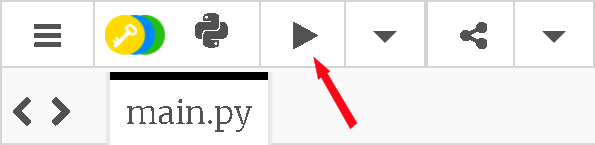
To execute code, press the “View the result” button:
CC BY-NC-SA 4.0
This work is licensed under a Creative Commons Attribution-NonCommercial-ShareAlike 4.0 International License [http://creativecommons.org/licenses/by-nc-sa/4.0/].
Created: Tuesday, 15 September 2020 12:39 EDT Last Modified: Monday, 14 February 2022 - 07:01 (EST)