Partial Fractions
Partial FractionsPrerequisite KnowledgeAlgebraUse Technology to Perform Polynomial DivisionCC BY-NC-SA 4.0
Author: John J Weber III, PhD Corresponding Textbook Sections:
- Section 7.4 – Integration of Rational Functions by Partial Fractions
Prerequisite Knowledge
This section contains the specific content from previous courses that you may need for CPT_06_Partial_Fractions.
Algebra
Example 01: Divide
Solution 01a:
Use Polynomial Division
Rewrite numerator will all missing terms:
Divide the dividend,
The quotient is
Thus,
Solution 01b:
Use Synthetic Division
Rewrite numerator will all missing terms:
Divide the dividend,
The quotient is
Thus,
Use Technology to Perform Polynomial Division
NOTE: On Assessments, you may use of technology to perform polynomial division without showing any work.
Mathematica
1(* Divide x^3+2 by x+1*)2PolynomialQuotientRemainder[x^3+2, x+1, x]Warnings:
Be very careful with the syntax. Syntax is the set of rules on how to write computer code. Every software program has its own unique syntax. Some basic Mathematica syntax is located at: https://www.jjw3.com/Common_Mathematica_Code.html.
PolynomialQuotientRemainder[ ] has three arguments:
- The function in the dividend (i.e., numerator),
- The function in the divisor (i.e., denominator),
- The independent variable.
- The function in the dividend (i.e., numerator),
For help on using the PolynomialQuotientRemainder[ ] function:
- In Mathematica, execute the code:
- Click on
- Click on local
- Read how to use the PolynomialQuotientRemainder[ ] function – you will be able to copy-paste code.
- In Mathematica, execute the code:
Remember, correct Mathematica code will be all black except for variables.
To execute code (including comment codes), press and hold the SHIFT key and press the ENTER key.
Mathematica returns the result
Python
- Be very careful with the syntax. Syntax is the set of rules on how to write computer code. Every software program has its own unique syntax. Some basic Python syntax is located at: https://www.jjw3.com/Common_Python_Code.html.
- Python requires
- Python requires
- Remember to use parens
- You can use pprint(factor(8x*3-1)) for pretty print.
- Python returns the result
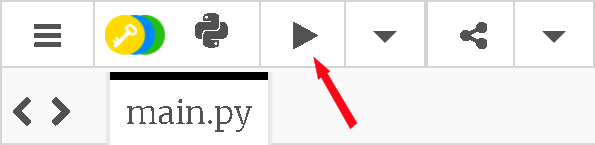
- To execute code, press the “View the result” button:
CC BY-NC-SA 4.0
This work is licensed under a Creative Commons Attribution-NonCommercial-ShareAlike 4.0 International License [http://creativecommons.org/licenses/by-nc-sa/4.0/].
Created: Monday, 06 September 2021 - 12:36 (EDT)