Substitution Rule
Substitution RulePrerequisite KnowledgeCalculus I RulesCheck Your WorkUse Technology to Verify a DerivativeCC BY-NC-SA 4.0
Author: John J Weber III, PhD Corresponding Textbook Sections:
- Section 5.5 – The Substitution Rule
Prerequisite Knowledge
Calculus I Rules
NOTE: You are not permitted to use this table on any Assessment.
| Function | Derivative | Function | Antiderivative |
|---|---|---|---|
Check Your Work
Use Technology to Verify a Derivative
Mathematica
NOTE: On all Assessments, Mathematica may be used to verify derivatives. You are expected to be able to show how to differentiate any function in this course.
x1(* Derivative of e^x *)2D[E^x, x]3
4(* Derivative of ln(x) *)5D[Log[x], x]6
7(* Derivative of log(x) *)8D[Log[10,x], x]9
10(* Derivative of sin(x) *)11D[Sin[x], x]12
13(* Derivative of sec^2(x) *)14D[Sec[x]^2, x]15
16(* Derivative of sin^{-1}(x) *)17D[ArcSin[x], x]Warnings:
Be very careful with the syntax. Syntax is the set of rules on how to write computer code. Every software program has its own unique syntax. Some basic Mathematica syntax is located at: https://www.jjw3.com/Common_Mathematica_Code.html.
D[ ] has at least two (2) arguments:
- The expression to be differentiated;
- The independent variable.
For help on using the D[ ] function:
- In Mathematica, execute the code:
- Click on
- Click on local
- Read how to use the D[ ] function – you will be able to copy-paste code.
- In Mathematica, execute the code:
To execute code (including comment codes), press and hold the SHIFT key and press the ENTER key.
Python
NOTE: On all Assessments, Python may be used to verify derivatives. You are expected to be able to show how to differentiate any function in this course.
Warnings:
- Be very careful with the syntax. Syntax is the set of rules on how to write computer code. Every software program has its own unique syntax. Some basic Python syntax is located at: https://www.jjw3.com/Common_Python_Code.html.
- Python requires ∗ for explicit multiplication, e.g.,
- Python requires ∗∗ for exponentiation, e.g.,
- Remember to use parens ( and ) to group factors consisting of multiple terms.
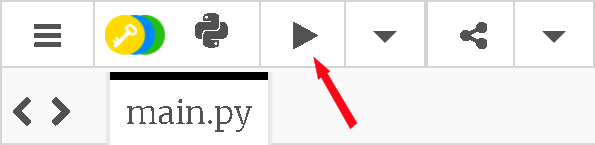
- To execute code, press the “View the result” button:
CC BY-NC-SA 4.0
This work is licensed under a Creative Commons Attribution-NonCommercial-ShareAlike 4.0 International License [http://creativecommons.org/licenses/by-nc-sa/4.0/].
Created: Monday, 10 January 2022 - 07:02 (EST)