Substitution Rule
Substitution RuleExpected Educational ResultsBloom’s TaxonomySubstitution RuleProcedure for Substitution Rule for Indefinite IntegralsUse Technology to Verify Definite IntegralsInvestigation 08HomeworkCC BY-NC-SA 4.0
Author: John J Weber III, PhD Corresponding Textbook Sections:
Section 5.5 – The Substitution Rule
Expected Educational Results
Objective 02–01: I can use a substitution to evaluate an indefinite integral using FTC-I.
Objective 02–02: I can use a substitution to evaluate a definite integral.
Bloom’s Taxonomy
A modern version of Bloom’s Taxonomy is included here to recognize various different levels of understanding and to encourage you to work towards higher-order understanding (those at the top of the pyramid). All Objectives, Investigations, Activities, etc. are color-coded with the level of understanding.

Substitution Rule
Procedure for Substitution Rule for Indefinite Integrals
NOTE: When using the Substitution Rule, you must completely convert all
Let
Substitute
Appropriately cancel factors.
For each converted integral, integrate with respect to
Substitute result back into terms of
Verify answer:
Use FTC-I; or
Use technology.
Example 04: Evaluate:
Solution 04:
NOTE:
Let
Then the differential for the above let statement is:
Rewrite the differential as
Substitute
Appropriately cancel factors:
Integrate with respect to
Substitute result back into terms of
Verify answer:
Use Technology to Verify Definite Integrals
Mathematica
NOTE: Mathematica is used here to verify definite integrals. On all Assessments, you must show that you understand the Calculus I concept of using
x1(* Example 03 *)2(* Evaluate the indefinite integral csc^(-1)(x)/(x sqrt(x^2-1)) *)3
4Integrate[ArcCsc[x]/(x Sqrt[x^2-1]), x]Warnings:
Be very careful with the syntax. Syntax is the set of rules on how to write computer code. Every software program has its own unique syntax. Some basic Mathematica syntax is located at: https://www.jjw3.com/Common_Mathematica_Code.html.
Integrate[ ] for indefinite integrals has two arguments:
The integrand, i.e., function of the definite integral;
The Mathematica syntax for
Remember to use parens
Remember, correct Mathematica code will be all black except for variables.
Mathematica does not return the antiderivative with
To execute code (including comment codes), press and hold the SHIFT key and press the ENTER key.
Python
NOTE: Python is used here to verify definite integrals. On all Assessments, you must show that you understand the Calculus I concept of using
Warnings:
Be very careful with the syntax. Syntax is the set of rules on how to write computer code. Every software program has its own unique syntax. Some basic Python syntax is located at: https://www.jjw3.com/Common_Python_Code.html.
All code is included above with comment codes that explain the executable code.
integrate( ) for indefinite integrals has two arguments:
The integrand, i.e., function of the definite integral;
You only need to change the function in the integrate( ) command.
The Python syntax for
Python requires
Remember to use parens
Python does not return the antiderivative with
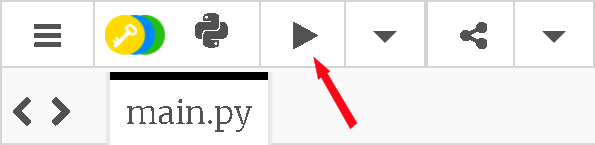
To execute code, press the “View the result” button:
Investigation 08
Evaluate the following indefinite integrals:
Homework
At this time, you should be able to complete the following assignments:
Section 5.5: # 51.
CC BY-NC-SA 4.0
This work is licensed under a Creative Commons Attribution-NonCommercial-ShareAlike 4.0 International License [http://creativecommons.org/licenses/by-nc-sa/4.0/].
Created: Monday, 9 August 2021 18:16 EDT Last Modified: Thursday, 8 June 2023 – 11:34 (EDT)