Fundamental Theorem of Calculus (FTC)
Fundamental Theorem of Calculus (FTC)Expected Educational ResultsBloom’s TaxonomyEvaluating Definite IntegralsInvestigation 17Investigation 18Use Technology to Verify Definite IntegralsInvestigation 19HomeworkCC BY-NC-SA 4.0
Author: John J Weber III, PhD Corresponding Textbook Sections:
Section 4.9 – Antiderivatives
Section 5.3 – The Fundamental Theorem of Calculus
Section 5.4 – Indefinite Integrals and the Net Change Theorem
Expected Educational Results
Objective 1–1: I can state the Fundamental Theorem of Calculus.
Objective 1–2: I can explain the meaning of the Fundamental Theorem of Calculus – Part I.
Objective 1–3: I can explain the meaning of the Fundamental Theorem of Calculus – Part II.
Objective 1–4: I can determine the properties of an area function using FTC-I and Calculus I.
Objective 1–5: I can evaluate indefinite integrals using the Fundamental Theorem of Calculus – Part I.
Objective 1–6: I can evaluate definite integrals using the Fundamental Theorem of Calculus – Part II.
Objective 1–7: I can use the Net Change Theorem to identify the meaning of
Objective 1–8: Given velocity of an object in motion along a line, I can find the object’s displacement and the total distance traveled.
Objective 1–9: Given acceleration of an object in motion along a line, I can find the object’s velocity, displacement, and the total distance traveled.
Bloom’s Taxonomy
A modern version of Bloom’s Taxonomy is included here to recognize various different levels of understanding and to encourage you to work towards higher-order understanding (those at the top of the pyramid). All Objectives, Investigations, Activities, etc. are color-coded with the level of understanding.

Evaluating Definite Integrals
Recall,
Fundamental Theorem of Calculus - Part II [FTC-II]: Let
https://PollEv.com/multiple_choice_polls/0NpJB99oKCqWZiOuGVt0v/respond
Investigation 17
What does it mean for
Investigation 18
NOTE: Exact values are always expected on all Assessments. This Investigation asks for decimal approximations only to verify answers.
Evaluate each of the following integrals (re-write the integrand, if needed):
Use Technology to Verify Definite Integrals
Mathematica
NOTE: Mathematica is used here to verify definite integrals. On all Assessments, you must show that you understand the Calculus concept of the definite integral.
x1(* Investigation 22-03 *)2(* Find definite integral [1+cos^2(x)]/cos^2(x) *)3(* from x=pi/6 to x=pi/4 *)4
5Integrate[(1+Cos[x]^2)/Cos[x]^2, {x, Pi/6, Pi/4}]Warnings:
Be very careful with the syntax. Syntax is the set of rules on how to write computer code. Every software program has its own unique syntax. Some basic Mathematica syntax is located at: https://www.jjw3.com/Common_Mathematica_Code.html.
Integrate[ ] has two arguments:
The integrand, i.e., function of the definite integral;
The Mathematica syntax for
Remember to use parens
Remember, correct Mathematica code will be all black except for variables.
To execute code (including comment codes), press and hold the SHIFT key and press the ENTER key.
Python
NOTE: Python is used here to verify definite integrals. You must show that you understand the Calculus I concept of the definite integral.
Warnings:
Be very careful with the syntax. Syntax is the set of rules on how to write computer code. Every software program has its own unique syntax. Some basic Python syntax is located at: https://www.jjw3.com/Common_Python_Code.html.
The Python syntax for
Python requires
You only need to change the three lines of code that are between the two
Remember to use parens
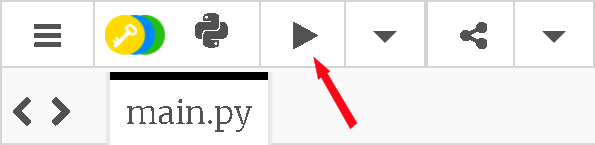
To execute code, press the “View the result” button:
Investigation 19
Explain the difference between an indefinite integral and a definite integral.
Homework
At this time, you should be able to complete the following assignments:
Section 5.3: # 21, 23, 25, 27, 29, 31, 33, 35, 37, 39, 41, 43, 45, 47, 49;
Section 5.4: # 27, 29, 31, 33, 35, 37, 39, 41, 45, 47, 49, 51, 53.
CC BY-NC-SA 4.0
This work is licensed under a Creative Commons Attribution-NonCommercial-ShareAlike 4.0 International License [http://creativecommons.org/licenses/by-nc-sa/4.0/].
Created: Tuesday, 25 August 2020 02:28 EDT Last Modified: Friday, 19 August 2022 - 19:08 (EDT)